

More than a decade ago, writing in his 2013 letter to shareholders, Warren Buffett revealed that his advice to the trustee of his wife's inheritance "could not be more simple":
Put 10% of the cash in short-term government bonds and 90% in a very low-cost S&P 500 index fund. (I suggest Vanguard’s.)
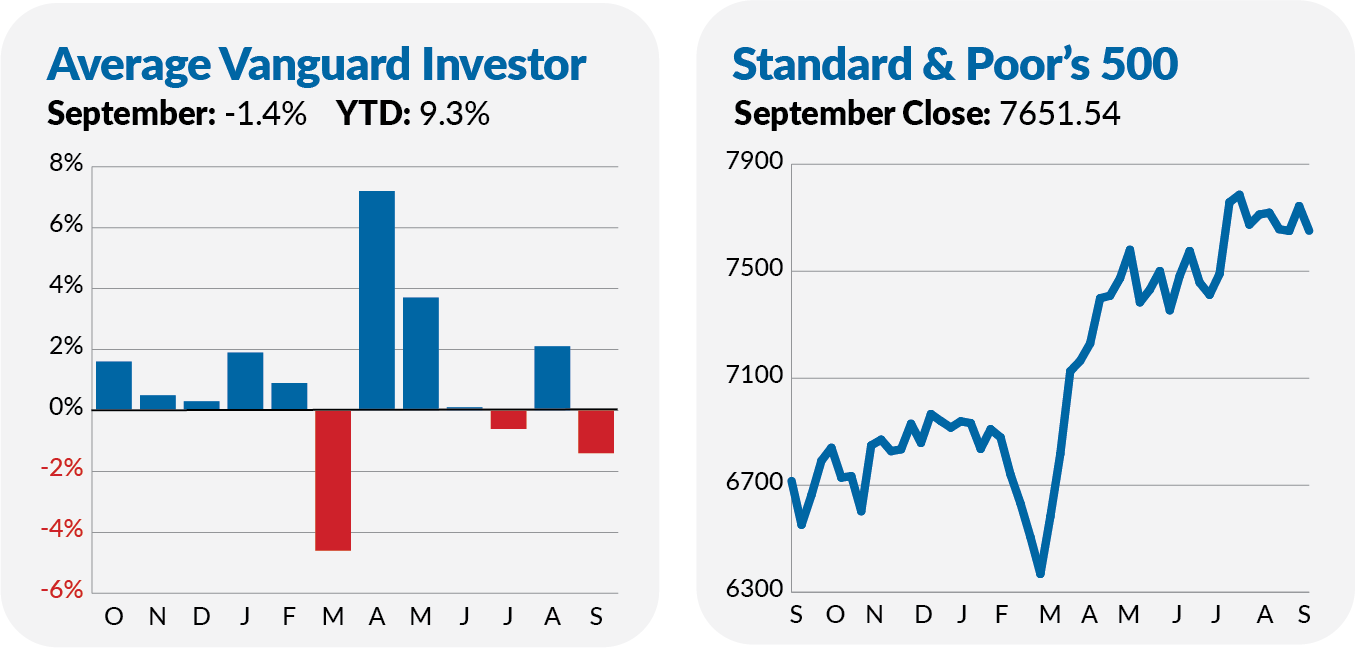
During 2026’s third quarter, Uncle Warren's advice was hard to beat. 0-3 Month Treasury Bill ETF (VBIL) was Vanguard’s best-performing bond fund, up 0.9%. 500 Index (VFIAX) gained 2.3%—only about 20 Vanguard stock funds did better.
If you followed Buffett's 90/10 advice, those two funds earned you 2.2%. That's better than every one of Vanguard's off-the-shelf allocation funds, from the LifeStrategy funds to the Target Retirement series to Wellington (VWELX)—and almost all the fund giant’s stock funds.
MidCap Index (VIMAX) slid 2.3%, SmallCap Index (VSMAX) dropped 5.8% and Real Estate Index (VGSLX) fell 6.2%. Total International Stock Index (VTIAX) declined 0.5%.
So, what worked besides 500 Index and short-term T-bills? Energy ETF (VDE) and Commodity Strategy (VCMDX) led, up 15.4%% and 12.8%%. Health Care ETF (VHT) came next, up 6.0%. After that came the big tech and mega-cap growth stocks, which explains why 500 Index held up as well as it did.
Look, you could do a lot worse than Buffett's 90/10 portfolio. It's simple, and it works over the long run. But I'm not giving up on greater diversification because of one quarter's results, and you shouldn't either.
A word on bonds
Bond yields moved sharply higher this quarter. The yield on the 10-year Treasury rose from 4.44% at the end of June to 5.29% today, its highest level in nearly two decades. When yields rise, bond prices fall. Total Bond Market Index (VBTLX) dropped 3.4% in the third quarter.
That’s not exactly what investors want from the “safe” side of their portfolios.