

Executive Summary: PRIMECAP-run funds have traded like momentum plays this year—not because the managers chased hot stocks, but because the market finally caught up to names they've owned for years, with Micron Technology chief among them. This deep dive traces Micron's rally and what it reveals about the limits of labeling active managers.
Have PRIMECAP Management’s stock pickers been trying to make up lost ground by chasing momentum?
It’s a reasonable question given recent results. Between June 2025 and June 2026, U.S. Momentum Factor ETF (VFMO), which holds the stocks that performed best over the past 6 and 12 months, gained 45.6%. That’s roughly double Total Stock Market Index’s (VTSAX) 23.1% gain over that stretch. The factor ETF fell out of bed in July, dropping 10.3%.
PRIMECAP (VPMCX) followed a similar path—gaining 58.6% in the 12 months ending in June 2026 and falling 7.5% in July.
So, have PRIMECAP’s managers been chasing momentum? Let me be abundantly clear: No. The PRIMECAP’s portfolio team hasn’t changed its stripes one bit.
Here’s what happened.
PRIMECAP Management has always been a growth-with-value investment shop. They typically buy stocks of companies that look to be faltering or have been “out of favor,” then hold on for what they believe are better times to come. When PRIMECAP is right, other investors finally wake up to the value in stocks that the PRIMECAP managers had picked long before, and prices begin to surge.
A typical case in point is Micron Technology, a recent favorite of the AI trade. Let’s use it as a case study of a classic PRIMECAP Management stock pick.
The Anatomy of a Classic PRIMECAP Pick
By my reckoning, Micron first entered PRIMECAP (the fund)’s portfolio in the first half of 1998. It’s fair to say the reasons for buying Micron in 1998 were different than today (artificial intelligence wasn’t a thing three decades ago). Still, the point is that the PRIMECAP portfolio managers saw value in the company and have shown they have patience that can last decades.
Micron has been a home run pick. Between June 1998 and July 2026, the chipmaker’s stock gained 6,535% (16.1% per year). That’s more than six times 500 Index’s (VFIAX) 981% return (8.8% annually). But don’t kid yourself—Micron was not an easy stock to own over these 28 years.
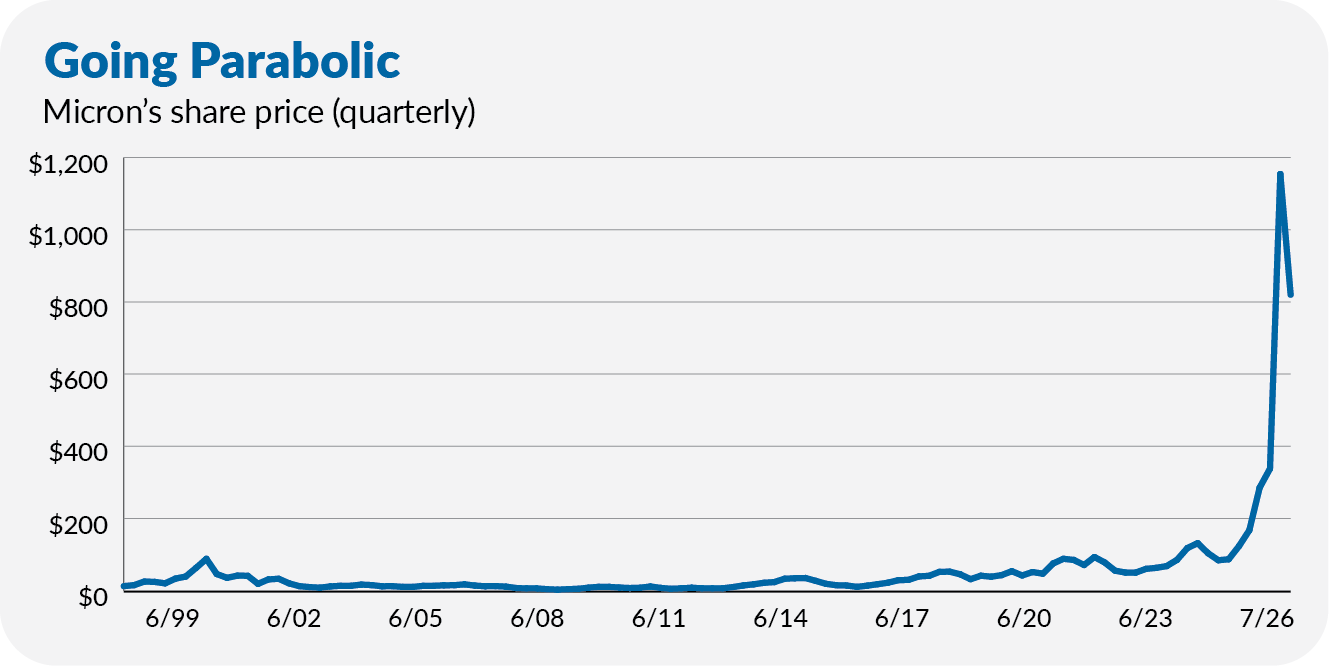
As the chart of Micron’s share price shows, nearly all of those market-beating returns were earned in the past year as the stock price went pretty much straight up.
Stopping the chart at the end of June 2025 (below) lets us see how the stock actually fared between 1998 and 2025. Micron’s stock rallied from below $20 to over $80 in the tech bubble. It then fell around 90% to below $10 as the tech bubble burst. Its price eventually hit a low of below $2 a share during the 2008 global financial crisis. Yes, that’s a 98% decline from its tech bubble peak!
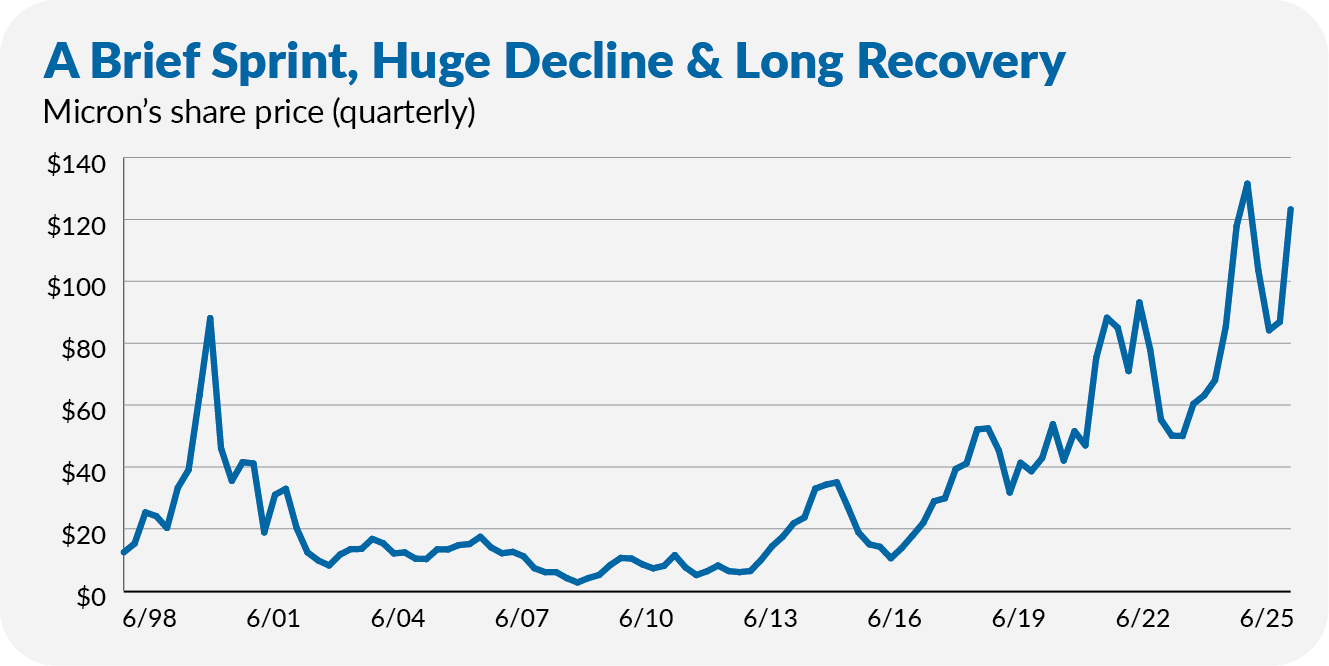
Micron’s stock rebounded from there and eventually surpassed its prior high in 2021. Even if we only look over the past five years, Micron shareholders have suffered bear-market-level declines on three occasions: A nearly 50% drop in 2022, a 36% decline in 2024 and July’s 29% slide.
As I’ve said before, even the best-performing stocks experience large drawdowns at times—Micron is no exception to the rule.
Micron looked like a smart pick early on for the PRIMECAP team, but it has been an uncomfortable stock to own more often than not—being deeply underwater for years.
So, how did Micron’s position in PRIMECAP evolve?